Humanoid robots
Humanoid robots for UK businesses
Your workplace was built for people, so a robot with a human shape can use it without rebuilding the environment. Forge Robotics helps UK organisations find out what that genuinely means for their operation — honestly, platform by platform, task by task.
Systems we connect into: control room and VMS, WMS, maintenance and helpdesk, and the incident log. How our integration software is designed to work
What they are
A robot shaped for the spaces you already have
Fixed automation needs the work brought to it. Wheeled robots need flat, open floors. A humanoid works where your people work — which is why the category matters even while it is still maturing.
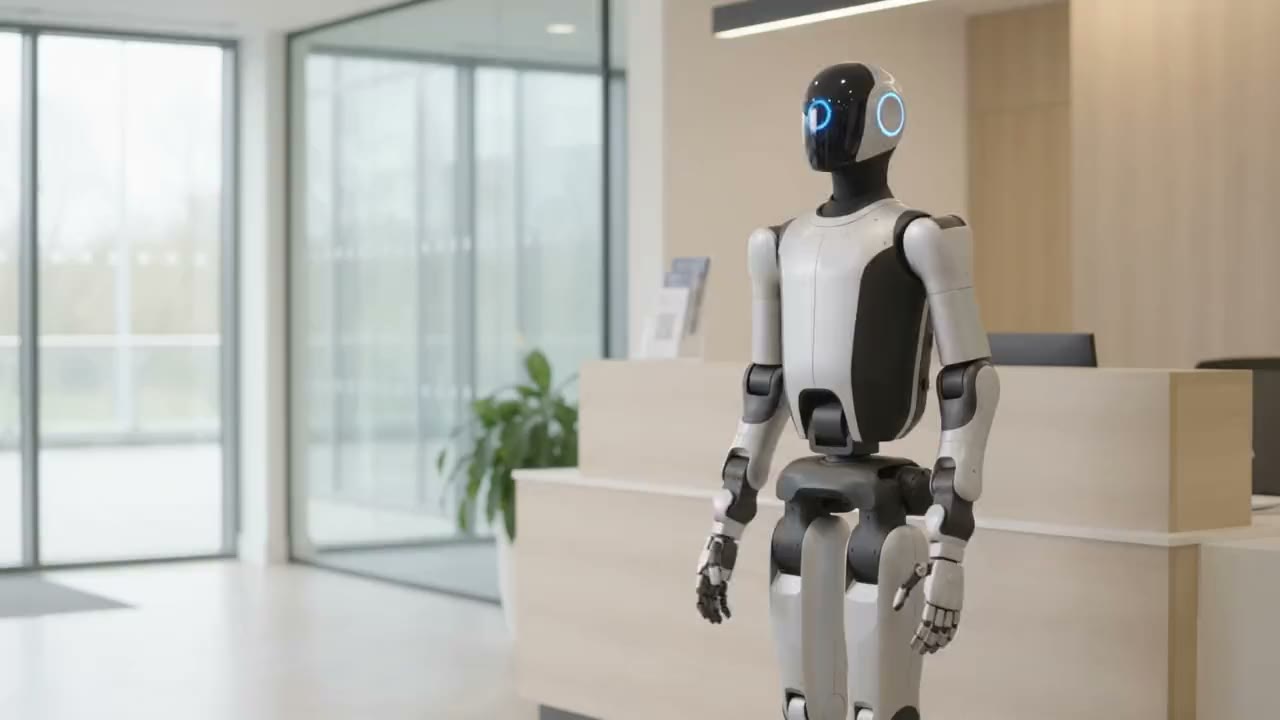
The anatomy tells you what to look for when comparing platforms: the quality of the perception head, the dexterity of the hands or grippers, battery life in the torso, and how confidently it balances on real floors. Specification sheets make every platform sound capable — the differences show up against a real task, which is what demonstrations are for.
Use cases
What UK businesses use humanoid robots for
The honest 2026 picture: supervised, repeatable support tasks in spaces built for people — ready to pilot, not ready to replace a shift.
Tote and case handling
Moving totes and cases between conveyors, racking and benches — the human-shaped warehouse work being piloted first.
Machine-side support
Loading, unloading and tending tasks beside machines in spaces designed for a person to stand.
Walkaround inspection
Visual checks of vehicles, plant and facilities using existing routes, doors and stairs.
Parts and sample movement
Carrying work between areas in prototype workshops, labs and light industrial settings.
Packing and bench work
Supervised support at packing benches and workstations — peak cover without re-tooling the line.
Research and development
Open SDK platforms for manipulation, locomotion and human-robot interaction research.
Go deeper: which humanoid robots UK businesses can use · what humanoid robots cost · sectors · robotics-as-a-service
Tell us the task and the space. The integration review says whether a humanoid fits and what it would report into.
Request an integration reviewPlatforms
13 humanoid platforms, one independent view
From compact research humanoids to full-size performance platforms — matched to your task, not to a brand.
Not locked to any single vendor: we demonstrate humanoid platforms from multiple manufacturers, and recommend on best fit for your task.
FR-H1 · Lightweight research humanoid
Ultra-light, ultra-affordable humanoid — the entry to two legs.
View datasheetFR-H2 · Compact dexterous humanoid
Compact professional humanoid — dexterous hands, AI avatar, portable.
View datasheetFR-H3 · Full-size performance humanoid
Full-size running humanoid — record-setting speed and power.
View datasheetPlus 10 more in the full robot range.
How adoption works
From curiosity to a defensible decision
No leaps of faith: a humanoid earns its place one supervised step at a time.
Not sure a humanoid fits yet? The integration review is the honest first test, before any demonstration.
Request an integration reviewFrequently asked questions
What is a humanoid robot?
A robot with a human-like form — two legs, two arms, a sensor head — built to work in spaces designed for people. The form factor is the point: it can use the same doors, stairs, benches, trolleys and tools your staff already use, so the environment does not have to be rebuilt around the robot.
What can humanoid robots actually do in 2026?
Realistically: supervised, repeatable support tasks — tote and case handling, machine-side work, walkaround inspection, parts movement and bench support. They are ready to pilot, not ready to run unsupervised shifts, and they do not yet match production-line speed. Anyone claiming otherwise should be pressed for evidence.
How much does a humanoid robot cost in the UK?
Entry-level research platforms start around the price of a car; enterprise-grade platforms run considerably higher, with Robotics-as-a-Service and hire options changing the economics of a first project. Our cost guide covers entry vs enterprise pricing, total cost of ownership and trial budgets in detail.
Are humanoid robots safe to work around people?
With proper scoping, yes — pilots run under agreed operating zones, speed limits, sensor-based stopping and supervision arrangements, planned with your health and safety lead through your existing risk-assessment process. Behaviour around people is one of the main things a pilot exists to evidence.
How do we trial a humanoid robot?
The realistic sequence: a feasibility conversation about the task, a demonstration against that task in a relevant setting, then a focused supervised pilot with agreed success measures. Forge Robotics arranges all three on a manufacturer-agnostic basis — and depending on the platform, hire, loan or evaluation arrangements can avoid buying hardware up front.
Get started
Start with an integration review
Tell us the task (a tote route, a machine to tend, an inspection round) and the systems your team runs. We come back with a written view of what fits and how it would connect, then arrange a demonstration against the task if the fit is real.